Trading Academy
 Forex Glossary
 Trading Guides
 News
News Blog
Blog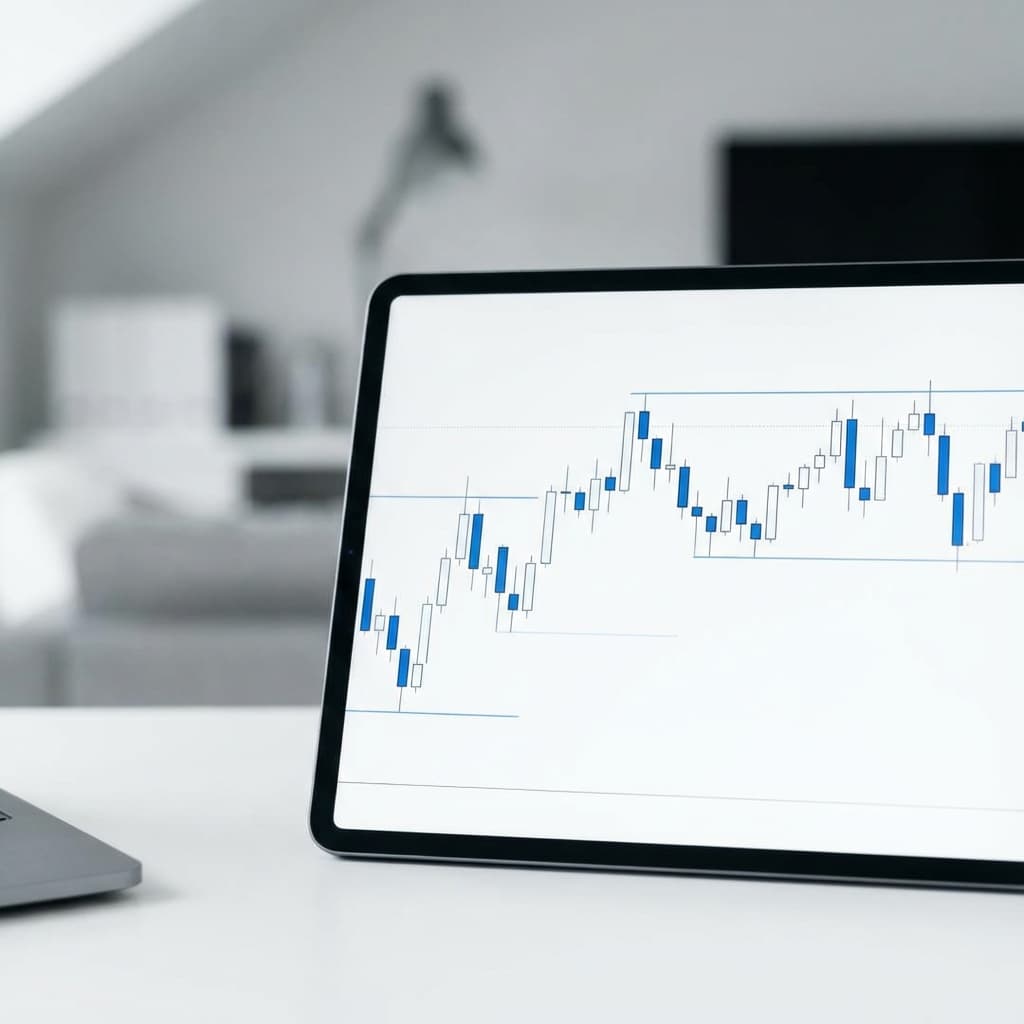





Key Takeaways
- Price action trading means analyzing raw price movements without relying on indicators—just candles, patterns, and market structure.
- Market structure (Higher Highs/Higher Lows, Lower Highs/Lower Lows) is the foundation of price action analysis.
- Price action traders believe all information is already reflected in price—indicators just repackage this data.
- Key concepts include swing points, break of structure (BOS), change of character (CHoCH), and order blocks.
- Price action works across all markets and timeframes because it reflects universal human psychology.
Table of Contents
Your chart looks like a rainbow of overlapping lines. You've got RSI, MACD, three moving averages, Bollinger Bands, and you still can't make a decision. Sound familiar? Price action trading offers a minimalist alternative: trade what you see, not what an indicator tells you.
Price action is the study of raw price movement on a chart. Instead of relying on lagging indicators, price action traders learn to read the story that candles tell—understanding supply and demand, market psychology, and the eternal battle between buyers and sellers.
"The market tells its own story. Everything else is just someone's opinion about that story." — Price Action Philosophy
What is Price Action Trading?
Price action trading is a methodology that uses the historical prices on a chart to make trading decisions. It focuses on:
Candlestick Patterns
What individual candles reveal about buyer/seller balance
Market Structure
The sequence of highs and lows that define trends
Support/Resistance
Key price levels where buyers and sellers congregate
Chart Patterns
Geometric formations that predict future moves
A "naked chart" usually contains just candlesticks and maybe horizontal lines for support and resistance. Nothing else. This forces you to really understand what price is doing.
Why Trade Without Indicators?
Indicators aren't bad—but many traders misuse them. Understanding the arguments for price action trading helps you decide what approach works for you:
Advantages of Price Action
- No lag: Indicators are derived from past prices—they're always behind. Price is now.
- Clean charts: Easier to see what's actually happening without visual clutter
- Universal: Works on any market (Forex, stocks, crypto) and any timeframe
- Adaptable: You learn to read the market, not just follow signals
- Complete picture: You see everything—no averaging or smoothing
Challenges to Consider
- Subjective: Two traders may interpret the same chart differently
- Learning curve: Takes time to develop "chart reading" intuition
- No alerts: Indicators can beep; charts are silent
- Requires screen time: You need to actively watch charts
- Discretionary: Hard to backtest or automate
The Lag Problem Explained
Consider a 20-period moving average. It averages the last 20 closes. This means when the market suddenly changes direction, the MA needs 10-20 candles to catch up. By that time, you've missed the move (or worse, taken a losing trade in the old direction). Price action traders see the reversal immediately in the candlesticks.
Understanding Market Structure
Market structure is the foundation of price action trading. It's how we determine trend direction objectively using the sequence of swing highs and swing lows.
Uptrend Structure
Higher Highs (HH) and Higher Lows (HL)
Each swing high is above the previous swing high. Each swing low is above the previous swing low. Buyers are in control.
Downtrend Structure
Lower Highs (LH) and Lower Lows (LL)
Each swing high is below the previous swing high. Each swing low is below the previous swing low. Sellers are in control.
Range/Sideways
Equal Highs and Equal Lows
Price oscillates between a high and low. Neither buyers nor sellers have taken control. Wait for a breakout.
Identifying Swing Points
A swing point is where price makes a notable turn. Identifying them correctly is essential for reading market structure.
Swing High
A candle (or group of candles) that makes a higher high than the candles on either side. It's a point where price stopped going up and started going down.
Swing Low
A candle (or group of candles) that makes a lower low than the candles on either side. It's a point where price stopped going down and started going up.
Break of Structure vs Change of Character
These are two critical concepts in modern price action trading, especially in the Smart Money Concepts (SMC) style:
Break of Structure (BOS)
A BOS occurs when price breaks a swing point in the direction of the trend. It confirms the trend is continuing.
- In an uptrend: BOS happens when price breaks above the previous swing high
- In a downtrend: BOS happens when price breaks below the previous swing low
- Trading implication: Look for buying opportunities after an uptrend BOS, selling after a downtrend BOS
Change of Character (CHoCH)
A CHoCH occurs when price breaks a swing point against the trend. It signals a potential trend reversal.
- In an uptrend: CHoCH happens when price breaks below the previous swing low (first lower low)
- In a downtrend: CHoCH happens when price breaks above the previous swing high (first higher high)
- Trading implication: Prepare to reverse your bias; wait for confirmation before acting
Price Action Entry Strategies
Price action provides specific setups for entering trades. Here are the most common approaches:
Break and Retest
The most common price action entry. Price breaks a key level, pulls back to test it from the other side, then continues.
- Identify a key support or resistance level
- Wait for a decisive break (candle close)
- Wait for price to pull back to the broken level
- Enter with a candlestick confirmation
Pin Bar Rejection
A pin bar (hammer/shooting star) at a key level shows rejection. The long wick indicates failed attempts to move past the level.
- Find a key level (S/R, round number, swing point)
- Wait for a pin bar to form with wick rejecting the level
- Enter in the direction of rejection
- Place stop beyond the wick
Engulfing Pattern Entry
An engulfing pattern at a key level shows a strong shift in control from one side to the other.
- Find a key level during a pullback
- Wait for an engulfing pattern to form
- Enter on the close of the engulfing candle
- Stop below/above the engulfing pattern
Trend Continuation
After a BOS confirms the trend, wait for a pullback to a previous structure level (order block) and enter with the trend.
- Confirm trend with BOS
- Wait for pullback to 50% or to order block
- Enter with candlestick confirmation
- Target the next swing point or new BOS
Combining with Other Analysis
While "pure" price action uses no indicators, many successful traders combine price action with a limited number of tools:
| Tool | How to Combine | Purpose |
|---|---|---|
| 200 EMA | Trade long above, short below | Identify major trend bias |
| Fibonacci | Look for PA patterns at fib levels | Confluence for pullback entries |
| S/R Zones | Mark horizontal levels on higher TF | Define where to look for PA signals |
| Volume (if available) | Confirm breakouts with volume spike | Filter weak vs strong moves |
Start Your Price Action Journey
The best way to learn price action is with screen time. Open a chart on a demo account, turn off all indicators, and practice identifying swing points, market structure, and candlestick patterns.
Open a Demo AccountFrequently Asked Questions
Is price action hard to learn?
Price action has a steeper initial learning curve than indicator-based trading because there's no "green arrow buy signal." However, once you develop the skill to read charts, you'll have a deeper understanding of how markets work. Expect 6-12 months of practice.
Can I combine price action with indicators?
Absolutely. Many successful traders use price action for entries and exits but use a simple moving average (like the 200 EMA) to determine overall trend direction. The key is not to let indicators override what the price is showing you.
What's the best timeframe for price action?
Price action works on all timeframes, but most traders find it more reliable on H1 and above. The Daily chart is considered the gold standard for clean price action signals. Lower timeframes have more noise.
Does price action work on forex?
Yes, price action works exceptionally well on forex due to high liquidity and 24/5 trading. The concepts of market structure, candlesticks, and key levels apply universally to any liquid market.
What books should I read to learn price action?
Popular starting points include "Price Action Trading" by Al Brooks (advanced), "Japanese Candlestick Charting Techniques" by Steve Nison (candlesticks), and modern content on Smart Money Concepts (SMC) for BOS/CHoCH trading.