Trading Academy
 Forex Glossary
 Trading Guides
 News
News Blog
Blog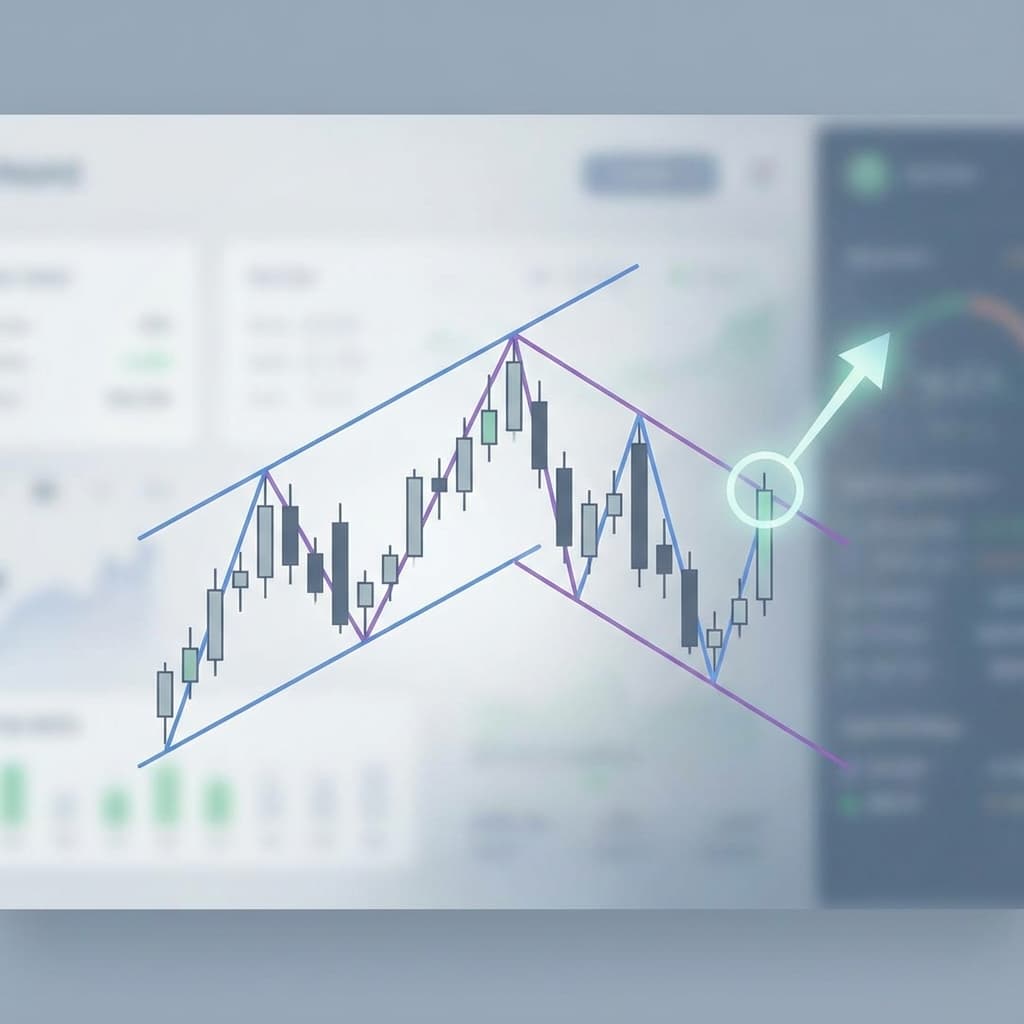





Key Takeaways
- Trendlines are diagonal lines drawn on charts to identify and confirm the direction of a trend.
- A valid trendline requires at least two touch points—more touches increase reliability.
- Uptrend lines connect higher lows; downtrend lines connect lower highs.
- Trendline bounces provide entry opportunities; breaks signal potential trend changes.
- The angle of the trendline matters—steeper trends are less sustainable than gradual ones.
Table of Contents
"The trend is your friend" is one of the oldest sayings in trading, and trendlines are the simplest way to identify that friend. By drawing a diagonal line connecting price points, you can visualize the direction of the market, find potential entry points, and identify when a trend might be ending.
Unlike horizontal support and resistance, trendlines move with price over time, making them a dynamic tool for tracking ongoing trends. In this guide, we'll teach you how to draw accurate trendlines and use them effectively in your trading.
Remember: Trendlines are visual guides, not precise scientific measurements. Use them to understand the overall direction, not as exact price points.
What Are Trendlines?
A trendline is a straight line drawn on a chart that connects two or more price points and extends into the future. It acts as a diagonal support or resistance level that moves with the trend.
Uptrend Line (Ascending)
Drawn below price by connecting higher lows. It acts as dynamic support—as long as price stays above the line, the uptrend is intact.
Trading implication: Look for buying opportunities when price bounces off the uptrend line.
Downtrend Line (Descending)
Drawn above price by connecting lower highs. It acts as dynamic resistance—as long as price stays below the line, the downtrend is intact.
Trading implication: Look for selling opportunities when price rejects from the downtrend line.
How to Draw Trendlines Correctly
Drawing trendlines is more art than science, but there are principles that lead to more accurate and useful lines:
Step-by-Step Guide
Identify the Trend Direction
First, determine if price is making higher lows (uptrend) or lower highs (downtrend). Don't force a trendline on a ranging market.
Find Two Clear Swing Points
For an uptrend, locate two significant higher lows. For a downtrend, locate two significant lower highs. These are your anchor points.
Connect the Points
Draw a straight line connecting these two points. Use your charting platform's trendline tool or manually draw it.
Extend the Line Forward
Project the line into the future. This is where you'll watch for bounces or breaks.
Validate with a Third Touch
A trendline becomes validated when price touches it a third time and respects it. More touches = stronger trendline.
Types of Trendlines
Major Trendlines
Drawn on higher timeframes (Daily, Weekly). Respected for months or years. Breaking a major trendline is significant.
Intermediate Trendlines
Found on H4 and Daily charts. Last weeks to months. Useful for swing trading.
Minor Trendlines
Drawn on H1 and lower. Short-lived, used for intraday trading. Less reliable but still useful.
Trading Trendline Bounces
The primary way to trade trendlines is to buy (or sell) when price bounces off the line. This is "buying the dip" in an uptrend or "selling the rally" in a downtrend.
Uptrend Bounce Strategy
Entry Rules:
- Wait for price to pull back to the uptrend line
- Look for a bullish candlestick pattern (hammer, engulfing) at the line
- Enter long after confirmation candle closes
Exit Rules:
- Stop Loss: Below the trendline (with buffer for wicks)
- Target: Previous swing high or resistance level
- Alternative: Trail stop along the trendline
Trading Trendline Breaks
When price finally breaks through a trendline, it can signal a trend reversal or at least a significant pullback. However, false breaks are common, so confirmation is crucial.
Uptrend Line Break (Bearish Signal)
When price breaks below an uptrend line, it suggests:
- The uptrend momentum is weakening
- A potential reversal or deeper correction is coming
- Exit longs or look for shorting opportunities
Downtrend Line Break (Bullish Signal)
When price breaks above a downtrend line, it suggests:
- Sellers are losing control
- A potential reversal or relief rally is possible
- Cover shorts or look for buying opportunities
How to Confirm a Valid Break
- Candle Close: Wait for a candle to close beyond the trendline, not just wick through
- Percentage Break: Some traders require a 1-3% move beyond the line
- Retest: Price often retests the broken trendline from the other side—this is an ideal entry
- Volume: Significant breaks usually occur with above-average volume
Understanding Trendline Angles
The angle (steepness) of a trendline tells you about the sustainability of the trend:
Steep Angle (60°+)
Unsustainable. Price is moving too fast. These trends often lead to sharp reversals. Be cautious trading with steep trendlines.
Healthy Angle (30-45°)
The "Goldilocks zone." Trends at this angle are sustainable and give the best trading opportunities. Ideal for trendline bounces.
Shallow Angle (<20°)
Weak trend, almost sideways. Might indicate a range rather than a trend. Consider horizontal S/R instead.
Common Mistakes to Avoid
Common Errors
- Forcing trendlines on ranging markets
- Drawing lines with only one touch point
- Constantly adjusting lines to fit current price
- Ignoring trendline breaks and hoping for reversal
- Using trendlines in isolation without other analysis
Best Practices
- Only draw trendlines when there's a clear trend
- Require at least 2 touch points, prefer 3+
- Draw lines once and don't constantly redraw
- Respect breaks—consider taking profits or reversing
- Combine with horizontal S/R and moving averages
Practice Drawing Trendlines
Open any chart on a regulated broker's platform and practice drawing trendlines on historical data. After drawing, scroll forward to see how price reacted to your lines.
Get StartedFrequently Asked Questions
How many touch points make a valid trendline?
Technically, two points define a line. However, a trendline becomes valid and tradeable when price touches it a third time and respects it. The more touches without breaking, the stronger the trendline.
Should I draw trendlines on wicks or bodies?
Both methods are valid. Using wicks gives a more conservative line that captures all rejections. Using bodies creates cleaner lines. Many traders draw trendlines using wicks but treat them as zones rather than exact levels.
What does it mean when a trendline is broken?
A trendline break suggests the trend is weakening or reversing. However, wait for confirmation—a candle close beyond the line, or a retest of the broken line from the other side. False breaks are common.
Can trendlines be used in ranging markets?
Trendlines work best in trending markets. In ranges, horizontal support and resistance are more appropriate. If you find yourself constantly redrawing trendlines, the market might be ranging.
What's the best timeframe for drawing trendlines?
Higher timeframes produce more significant trendlines. Start with the Weekly or Daily to identify major trends, then use H4 for intermediate trends. Lower timeframe trendlines are less reliable but can be used for entries.