Trading Academy
 Forex Glossary
 Trading Guides
 News
News Blog
Blog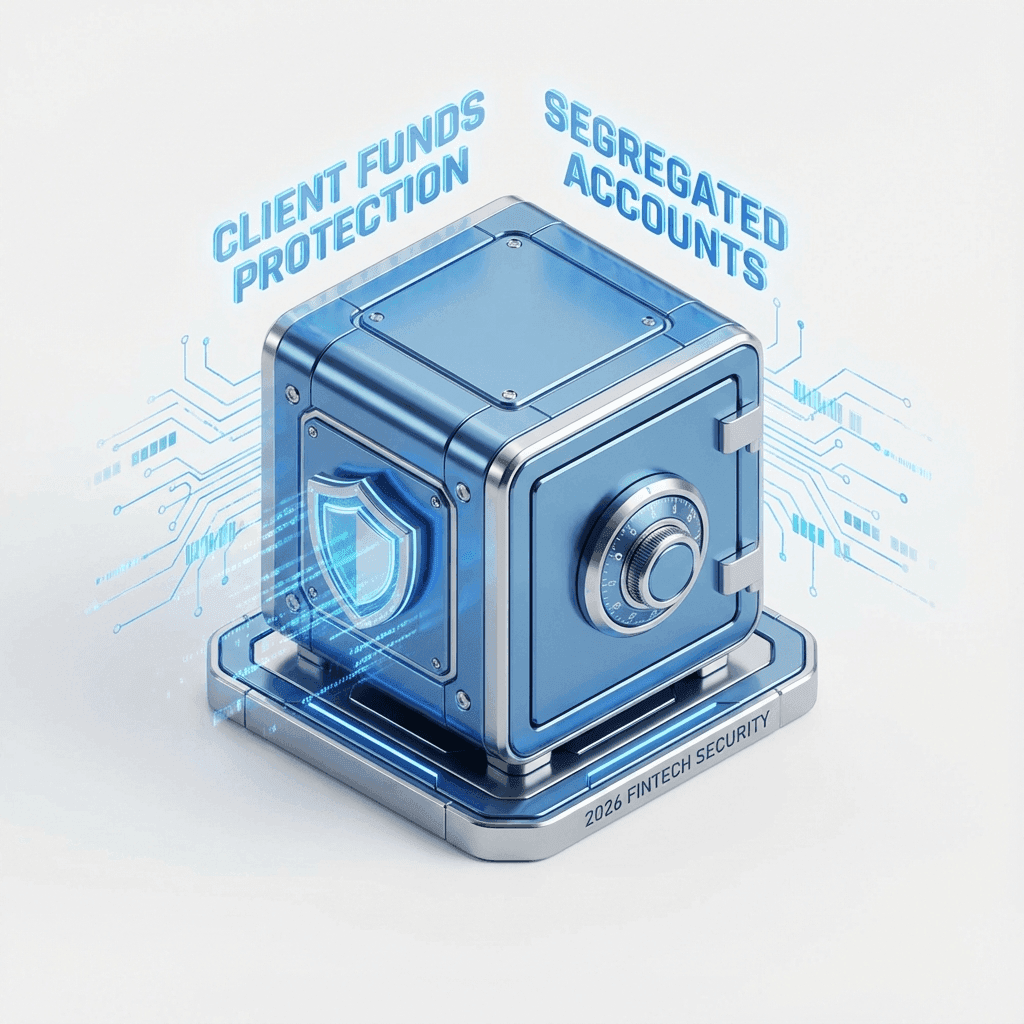




Key Takeaways
- Regulation Matters: Unregulated brokers can legally disappear with your money. Always choose FCA, ASIC, or CySEC.
- Segregated Accounts: This legal requirement ensures your deposit is held in a top-tier bank (e.g., Barclays) separate from the broker's operating funds.
- Negative Balance Protection (NBP): A critical safety valve that prevents you from losing more than your deposit during "Black Swan" events.
- Compensation Schemes: Acts as "Insolvency Insurance." The FSCS (UK) covers up to £85,000 if the broker goes bankrupt.
- Scam Check: Verify the license number on the regulator's official domain, not just the broker's website footer.
Table of Contents
The Wild West of Forex
Forex is a decentralized "Over-The-Counter" (OTC) market. There is no central exchange like the NYSE. This structural freedom makes it a haven for scammers.
Without proper due diligence, you are simply handing your money to a stranger on the internet. As discussed in our Forex Scams Guide, the industry is rife with "Bucket Shops" that profit when you lose.
The Golden Rule:
If a broker is not regulated in a Tier-1 jurisdiction (USA, UK, Australia, EU, Japan, Canada), treat your deposit as a donation. You might never see it again.
Broker Bankruptcy: What Happens?
Brokers are businesses. They have expenses: rent, server costs, marketing, staff salaries. Sometimes, they fail.
Segregated Funds is the line of defense. It means the broker must hold client money in a separate "Client Trust Account" at a Tier-1 bank.
Why it matters:
If the broker goes bust, the liquidators (lawyers) seize the broker's assets to pay debts. If your money is in the "Company Account," it gets seized. If it is in the "Client Trust Account," the liquidators cannot touch it. It is returned to you.
Govt Insurance Scheme (FSCS, ICF)
Even with segregation, fraud can happen. The CEO might steal the money. This is where Government Compensation Schemes come in.
| Scheme | Country | Coverage Limit | Reliability |
|---|---|---|---|
| FSCS | United Kingdom (FCA) | £85,000 per person | Extremely High |
| ICF | Cyprus (Europe/CySEC) | €20,000 per person | High |
| SIPC | USA (CFTC/NFA) | $250,000 (Cash limit) | Extremely High |
| IFC | International (Hong Kong) | Variable (Often €20k) | Medium |
Note: This protection only applies to "Retail Clients." If you classify yourself as a "Professional Client" to get higher leverage (see Leverage Risks), you often waive your right to this compensation.
Negative Balance Protection Explained
Leverage magnifies losses. In a standard market, a "Margin Call" closes your trades before you hit $0.
But in a "Gap" (e.g., Weekend gaps, Black Swan events), price can jump past your Stop Loss.
- Without NBP: Account Balance goes to -$15,000. You legally owe the broker $15,000. They can sue you.
- With NBP: Account Balance goes to -$15,000. The broker writes it off. Your balance is reset to $0. You lose your deposit, but nothing more.
Horror Stories: Historical Failures
1. The Swiss Franc Crash (2015)
The SNB unpegged the Franc from the Euro. EUR/CHF dropped 20% in minutes. Major brokers like Alpari UK went bankrupt instantly because their clients lost so much money the broker couldn't cover the negative balances. Clients with FSCS protection eventually got their money back.
2. IronFX (The Bonus Trap)
A broker that offered massive "100% Bonuses." Traders used the bonus to hedge risklessly. When IronFX realized this, they froze withdrawals for thousands of clients, claiming "Abusive Trading." Millions were lost. Lesson: Avoid massive bonuses.
3. FTX (Crypto Crossover)
While crypto, it showed that "Unregulated" entities can simply strive money. There was no segregation. User funds were used for risky bets.
How to Spot a Fake Broker
- Cold Calling: "Hello, I am a senior account manager..." → SCAM. Regulated brokers never cold call.
- Crypto Deposits Only: If you can't wire transfer to a bank name matching the broker, run.
- Guaranteed Returns: "Invest $1000, get $2000 in a week." Impossible.
- Managed Accounts: Brokers executing trades FOR you is a conflict of interest.
Frequently Asked Questions
Are offshore brokers (St. Vincent, Seychelles) safe?
Generally, no. You have zero legal recourse if they steal your money. Some reputable big brands have offshore branches for high leverage, but you trust their brand reputation, not the regulator.
How do I verify a license?
Go to the regulator's website (e.g., register.fca.org.uk) and type the broker's name. Ensure the URL matches exactly. Clone firms exist.
Is my money safe in Crypto brokers?
Less safe. Crypto is less regulated. If the exchange gets hacked, funds are often gone. Stablecoin reserves are not the same as government insurance.
What is 'Civil Liability Insurance'?
Some offshore brokers buy private insurance (e.g., from Lloyd's of London) to cover client funds up to $1M. This is a good sign for an unregulated broker, but verify the policy certificate.
Can I sue a broker?
If they are regulated, you file a complaint with the "Financial Ombudsman" (free). If they are unregulated offshore, suing them is practically impossible and costs more than you lost.
For deeper comparison, review our best forex brokers, check individual broker reviews, use the Match Me to a Broker quiz, and calculate risk with the position size calculator.