Trading Academy
 Forex Glossary
 Trading Guides
 News
News Blog
Blog



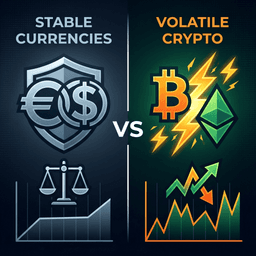
Finding the best crypto trading apps in 2026 has become one of the most searched topics among retail traders, and for good reason. Hybrid AI-human portfolios achieved 27% higher risk-adjusted returns compared to purely human strategies, which means the platform you choose directly impacts your bottom line. With hundreds of apps competing for your attention, we have tested, compared, and reviewed the top options available today so you can make an informed decision.
Key Takeaways
| Question | Answer |
|---|---|
| What is the best crypto trading app overall in 2026? | Exness ranks highly for global regulation, tight spreads, and broad crypto CFD coverage, making it a top choice for most traders. |
| What is the minimum deposit for crypto trading apps? | Minimums range from $0 (BlackBull Markets) to $100 (FP Markets), with most platforms sitting between $5 and $50. |
| Can I trade Bitcoin on a crypto CFD app without owning it? | Yes. Crypto CFD brokers let you speculate on price movements without needing a crypto wallet or owning any coins. |
| Are crypto trading apps regulated and safe? | The best crypto trading apps are regulated by bodies like the FCA and CySEC, giving users a meaningful layer of financial protection. |
| Which crypto trading app is best for beginners? | XM and BlackBull Markets are strong picks for beginners due to low entry requirements and intuitive mobile interfaces. |
| Do any crypto trading apps support copy trading? | Yes. Platforms like Exness and FP Markets both support copy trading features that let you replicate expert traders automatically. |
| Can I use TradingView with a crypto trading app? | Several brokers including Exness and FP Markets offer native TradingView integration, enabling chart-based crypto execution from mobile or desktop. |
What Makes the Best Crypto Trading Apps Stand Out in 2026?
Not all crypto trading apps are created equal. The difference between a great app and a mediocre one comes down to a handful of core criteria that directly affect your trading results.
We evaluate every platform across five primary dimensions: regulatory credibility, fee structure, platform performance, asset coverage, and mobile usability. Apps that score well across all five categories earn our top recommendations.
- Regulation: FCA, CySEC, and ASIC licenses signal that client funds are separated and the platform is held to professional standards.
- Fees and spreads: Lower spreads on BTC/USD and ETH/USD directly reduce your cost per trade.
- Asset coverage: The best platforms offer 50 to 100+ crypto pairs, not just the top 5.
- Mobile performance: Speed, charting tools, and order execution quality on iOS and Android matter enormously for active traders.
- Deposit flexibility: Low minimums and fast withdrawals make apps accessible to traders at every level.
A quick guide to the five features to evaluate in crypto trading apps. Learn what matters for security, fees, usability, asset support, and reliability.
Best Crypto Trading Apps for CFD Trading: Top Platforms Reviewed
Crypto CFD apps occupy a specific and powerful niche. They allow traders to go long or short on Bitcoin, Ethereum, and hundreds of altcoins without ever managing a wallet or private key.
Below is a comparison of the leading platforms we reviewed for 2026, including their minimum deposit requirements and key strengths.
| Broker | Min. Deposit | Key Crypto Feature | Platforms |
|---|---|---|---|
| Exness | $10 | Global regulation, wide crypto range | MT4, MT5, TradingView |
| FP Markets | $100 | ECN-like conditions, low spreads | MT4, MT5, IRESS, TradingView |
| Vantage | $50 | Raw spreads option for crypto CFDs | MT4, MT5 |
| RoboForex | $10 | R StocksTrader for crypto and stocks | MT4, MT5, cTrader, R StocksTrader |
| BlackBull Markets | $0 | High leverage crypto trading | MT4, MT5, TradingView |
| XM | $5 | All-round crypto CFD coverage | MT4, MT5 |
| Hantec Markets | $10 | Regulated broker with crypto CFDs | MT4, MT5 |
Exness: One of the Best Crypto Trading Apps for Regulated Trading
Exness is consistently one of the most-recommended platforms when traders ask about the best crypto trading apps in 2026. Its combination of FCA and CySEC regulation, instant withdrawals, and a minimum deposit of just $10 makes it genuinely accessible.
The Exness mobile app supports both MT4 and MT5, as well as direct TradingView integration. Traders can execute crypto CFD positions on Bitcoin, Ethereum, and a wide range of altcoins directly from their phone in seconds.
Our verdict on Exness: Strong regulatory credibility combined with a low entry barrier and fast execution makes Exness the best crypto trading app for traders who prioritize trust and cost-efficiency.
Key strengths of Exness for crypto trading:
- FCA and CySEC regulated, providing genuine client fund protection
- Instant withdrawals, which is rare in the CFD broker space
- Native TradingView integration for chart-based mobile trading
- MT4 and MT5 support for automated strategy deployment
- Minimum deposit of just $10, removing barriers for new traders
FP Markets, RoboForex, and Other Best Crypto Trading Apps Worth Considering
FP Markets targets the more experienced end of the market. With a minimum deposit of $100 and ECN-like pricing, it suits traders who need institutional-grade execution on crypto CFD positions.
The platform supports MT4, MT5, and IRESS, plus TradingView integration for chart-driven trading. Its raw spread accounts make it one of the most cost-efficient options for high-volume crypto traders.
RoboForex offers a differentiated product through its R StocksTrader platform, which combines crypto CFDs with stock trading in a single unified mobile interface. The $10 minimum deposit and access to cTrader make it particularly attractive for traders who want platform flexibility alongside crypto exposure.
BlackBull Markets stands out for its $0 minimum deposit, which is genuinely rare among regulated brokers offering crypto CFD products. For traders who want to test a live account before committing capital, BlackBull Markets provides one of the most accessible entry points in 2026.
XM remains a top choice for traders who value simplicity and breadth. With a $5 minimum deposit and broad crypto CFD coverage across MT4 and MT5, it offers a clean mobile experience that suits beginners and intermediate traders alike.
Best Crypto Trading Apps for Beginners: What to Look For
If you are new to crypto trading, the best crypto trading apps for beginners share a common set of characteristics. They keep fees transparent, provide educational resources, and offer mobile interfaces that don't require technical expertise to navigate.
Here is what we recommend beginners prioritize when selecting a crypto trading app in 2026:
- Low minimum deposit: Start with $5 to $50 to minimize risk while you learn how markets behave.
- Regulated broker: Choose platforms licensed by FCA, CySEC, or ASIC to protect your funds.
- Demo account availability: Practice with virtual funds before committing real capital.
- Clear fee disclosure: Avoid apps that hide spreads or charge unclear overnight fees.
- Mobile-first design: A clean, intuitive app reduces errors when you are starting out.
- Customer support: 24/5 or 24/7 live chat is important when you encounter issues.
XM ($5 minimum) and BlackBull Markets ($0 minimum) are our top beginner recommendations from the platforms we have reviewed in 2026.
Platform Technology: MT4, MT5, and TradingView in the Best Crypto Trading Apps
The trading platform powering a crypto app matters more than most traders realize. MT4 remains the most widely supported platform globally and is ideal for traders who use automated strategies or Expert Advisors.
MT5 expands on MT4 with additional timeframes, more order types, and broader multi-asset capability. Brokers like Exness, FP Markets, and RoboForex all offer full MT5 support for crypto CFD trading, which makes them versatile choices.
TradingView integration is increasingly a deciding factor for traders who prefer web-based chart analysis. Exness and FP Markets both support native TradingView execution, meaning you can analyze and place crypto trades from a single browser tab without switching between platforms.
For traders who prioritize raw execution quality and tight spreads on crypto, ECN-capable brokers such as FP Markets route orders through deep liquidity pools, which reduces slippage during volatile market conditions.
Security and Regulation in the Best Crypto Trading Apps
Security is not optional when evaluating the best crypto trading apps in 2026. A platform that lacks proper regulatory oversight puts your funds at direct risk, regardless of how good its interface looks.
The most trusted platforms in our review hold licenses from multiple regulators simultaneously. Exness, for example, carries both FCA (UK) and CySEC (EU) licenses, which means it must comply with two separate sets of client protection rules.
Key security features to verify before depositing:
- Segregated client fund accounts (your money is kept separate from company funds)
- Two-factor authentication (2FA) on mobile login
- Negative balance protection (you cannot lose more than your deposit)
- SSL encryption across all app transactions
- Investor compensation scheme membership where applicable
Fees, Spreads, and Costs Across the Best Crypto Trading Apps
Trading costs have a compounding effect on your returns over time. Even a small difference in the spread on BTC/USD can translate to hundreds of dollars in additional costs for active traders each month.
Here is how costs typically break down across the best crypto trading apps in 2026:
- Spread-only pricing: XM and Exness use spread-based pricing with no per-trade commission on standard accounts. Simpler for casual traders to understand.
- Raw spread plus commission: FP Markets and Vantage offer raw spread accounts where you pay a small commission per lot, but the underlying spread is much tighter. Better for high-frequency traders.
- Overnight (swap) fees: Holding crypto CFD positions overnight incurs swap charges. Some brokers offer swap-free Islamic accounts to eliminate this cost.
- Deposit and withdrawal fees: Most of the platforms we reviewed charge no deposit fees. Withdrawal fees vary by method and should be confirmed before you fund an account.
For traders focused on minimizing total cost, low spread brokers with raw ECN pricing consistently deliver better outcomes over the long term than commission-free platforms with wider spreads.
Copy Trading and Advanced Features in the Best Crypto Trading Apps
Copy trading has matured significantly in 2026. The ability to automatically replicate the positions of verified, high-performing traders is now a mainstream feature rather than a novelty.
Exness and FP Markets both support copy trading functionality, which allows users to allocate capital to signal providers and mirror their crypto trades in real time. This feature is particularly valuable for traders who understand market fundamentals but lack the time to monitor positions continuously.
Beyond copy trading, advanced features that distinguish the best crypto trading apps in 2026 include:
- AI trade analysis tools: Apps that surface AI-generated insights on market conditions and position sizing
- Algorithmic trading support: MT4 and MT5 both enable Expert Advisors (EAs) for automated crypto strategies
- Multi-account management: Useful for traders running separate strategies across different risk profiles
- Integrated economic calendars: Helps time crypto trades around macro events like Fed rate decisions
Crypto CFDs vs. Spot Crypto: Which Approach Suits You Best?
Understanding the difference between crypto CFDs and spot crypto is essential before selecting a trading app. They serve different trading goals and carry different risk profiles.
Crypto CFDs let you speculate on price movements with leverage, go short as well as long, and trade without managing a wallet. You never own the underlying asset. This makes CFD-based crypto trading apps faster to set up and simpler to manage for traders familiar with traditional financial markets.
Spot crypto trading means you own the actual coin. You can transfer it to a private wallet, earn staking rewards, and use it within DeFi ecosystems. However, it typically involves slower onboarding, more complex custody decisions, and limited short-selling options.
For traders whose primary goal is profit from price movements rather than participation in blockchain ecosystems, the best crypto trading apps in 2026 are CFD platforms regulated by major financial authorities. They offer the execution speed, leverage, and cost structure that active trading demands.
Conclusion: Choosing the Best Crypto Trading Apps in 2026
The best crypto trading apps in 2026 combine regulatory credibility, competitive fees, powerful mobile platforms, and broad crypto asset coverage. Based on our research and testing, Exness stands at the top of our rankings for its FCA/CySEC regulation, instant withdrawals, and accessible $10 minimum deposit.
FP Markets is the best pick for ECN-grade execution and TradingView integration. BlackBull Markets earns top marks for accessibility with its $0 minimum. XM remains the most approachable option for beginners entering the best crypto trading apps space for the first time.
Whether you are looking for a crypto trading app for day trading, copy trading, or long-term speculative positions, the platforms in this review cover the full spectrum of needs. Always confirm the regulatory status of any app before depositing funds, and start with a demo account to familiarize yourself with execution quality before going live.
For a deeper dive into broker-specific crypto offerings, our full breakdown of the best crypto CFD brokers for 2026 covers spreads, leverage limits, and platform comparisons in detail.
Frequently Asked Questions
What is the best crypto trading app for beginners in 2026?
XM is the best crypto trading app for beginners in 2026 due to its $5 minimum deposit, clean mobile interface, and broad crypto CFD coverage across both MT4 and MT5. BlackBull Markets is a close second with its $0 minimum deposit requirement.
Is it safe to use a crypto trading app in 2026?
Yes, using a regulated crypto trading app is safe provided the broker holds licenses from reputable authorities like the FCA, CySEC, or ASIC. These regulations require client fund segregation, negative balance protection, and transparent fee disclosures, which collectively protect your capital.
What are the fees on the best crypto trading apps?
Fees on the best crypto trading apps vary by account type. Spread-based accounts charge no direct commission but embed the cost in the bid/ask difference, while raw spread accounts charge a small per-lot commission with tighter underlying spreads. Most regulated platforms do not charge deposit fees in 2026.
Can I trade Bitcoin and Ethereum on a mobile crypto trading app?
Yes. All major crypto trading apps reviewed here support Bitcoin and Ethereum CFDs on mobile, with many also covering Litecoin, Ripple, Cardano, and 100+ additional altcoin pairs. MT5-based apps tend to offer the widest multi-asset coverage.
What is the difference between a crypto trading app and a crypto exchange app?
A crypto trading app in the CFD broker sense lets you speculate on price movements with leverage without owning the underlying asset, while a crypto exchange app lets you buy and hold actual coins. CFD trading apps are typically faster to set up, offer short-selling, and are regulated by financial authorities rather than crypto-specific bodies.
Which crypto trading app has the lowest fees in 2026?
Exness and XM offer among the lowest all-in trading costs for crypto CFDs in 2026, particularly on standard accounts. For traders who execute high volumes, FP Markets and Vantage raw spread accounts deliver tighter effective costs despite their per-lot commission structure.
Is AI trading worth using in a crypto app in 2026?
AI-assisted features in the best crypto trading apps are worth exploring in 2026, particularly for trade analysis and risk management. Research from KuCoin and Forvest shows that over a third of active crypto investors are already using AI tools within their apps, and hybrid strategies have demonstrated meaningfully improved risk-adjusted performance compared to purely manual approaches.
For deeper comparison, review our best forex brokers, check individual broker reviews, use the Match Me to a Broker quiz, and calculate risk with the position size calculator.